The lake rises
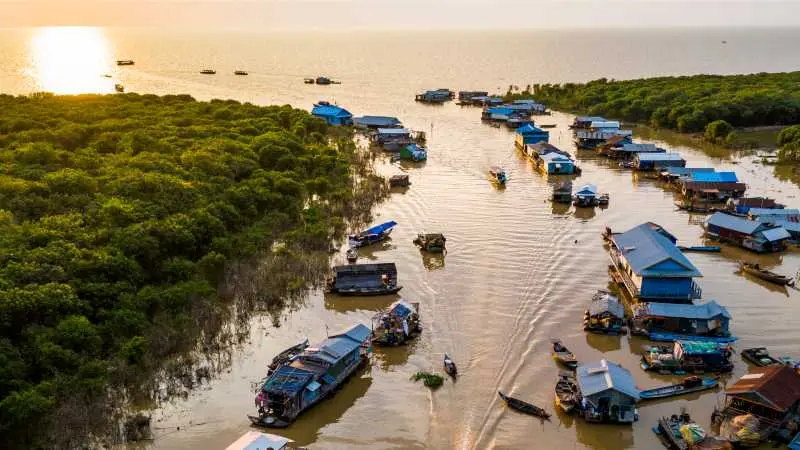
Monsoon water flows into the lake and spreads across forest and floodplain. Villages, boats and wildlife move with it.
CAMBODIA’S GREAT LAKE
THE BLUE HEART OF CAMBODIA
The lake’s scale changes dramatically through the year. Water reverses direction through the Tonle Sap River, spreads into forest and fields, then retreats—supporting fish, farming, transport and ways of life that have evolved with this annual pulse.
To visit well is to look beyond a quick boat ride. Choose a community-minded operator, ask how local people benefit and let the season explain what you see.
ONE LAKE · THREE FACES
Monsoon water flows into the lake and spreads across forest and floodplain. Villages, boats and wildlife move with it.
The Tonle Sap River reverses again and the lake begins feeding the Mekong system—a natural pulse central to Cambodian life.
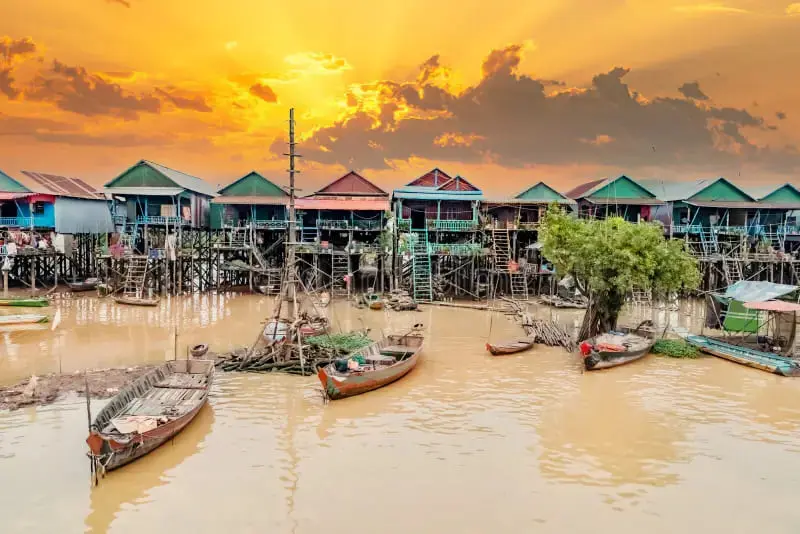
Lower water reveals roads, stilts and the immense seasonal difference. Journeys may look and feel completely different.
LIFE ABOVE THE WATERLINE
CHOOSE THE RIGHT EXPERIENCE
Stilted homes, waterways and seasonally flooded forest make this the most practical introduction for many Angkor visitors. Go early or later in the day and avoid rushing.
A major waterbird habitat reached across the lake. Use an experienced conservation-minded guide, start early and expect a longer, nature-led day.
Combine lake landscapes with pottery villages, countryside and a less hurried look at central Cambodia between Phnom Penh and Battambang.
TRAVEL WITH RESPECT
CONNECT THE COUNTRY
Balance stone temples with a patient half-day or full-day journey into lake and village life.
Continue through rice country to art, architecture, food and the Sangkae River.
Break the journey to Phnom Penh with pottery traditions and a quieter edge of the lake.
CAMBODIA FLOWS THROUGH HERE